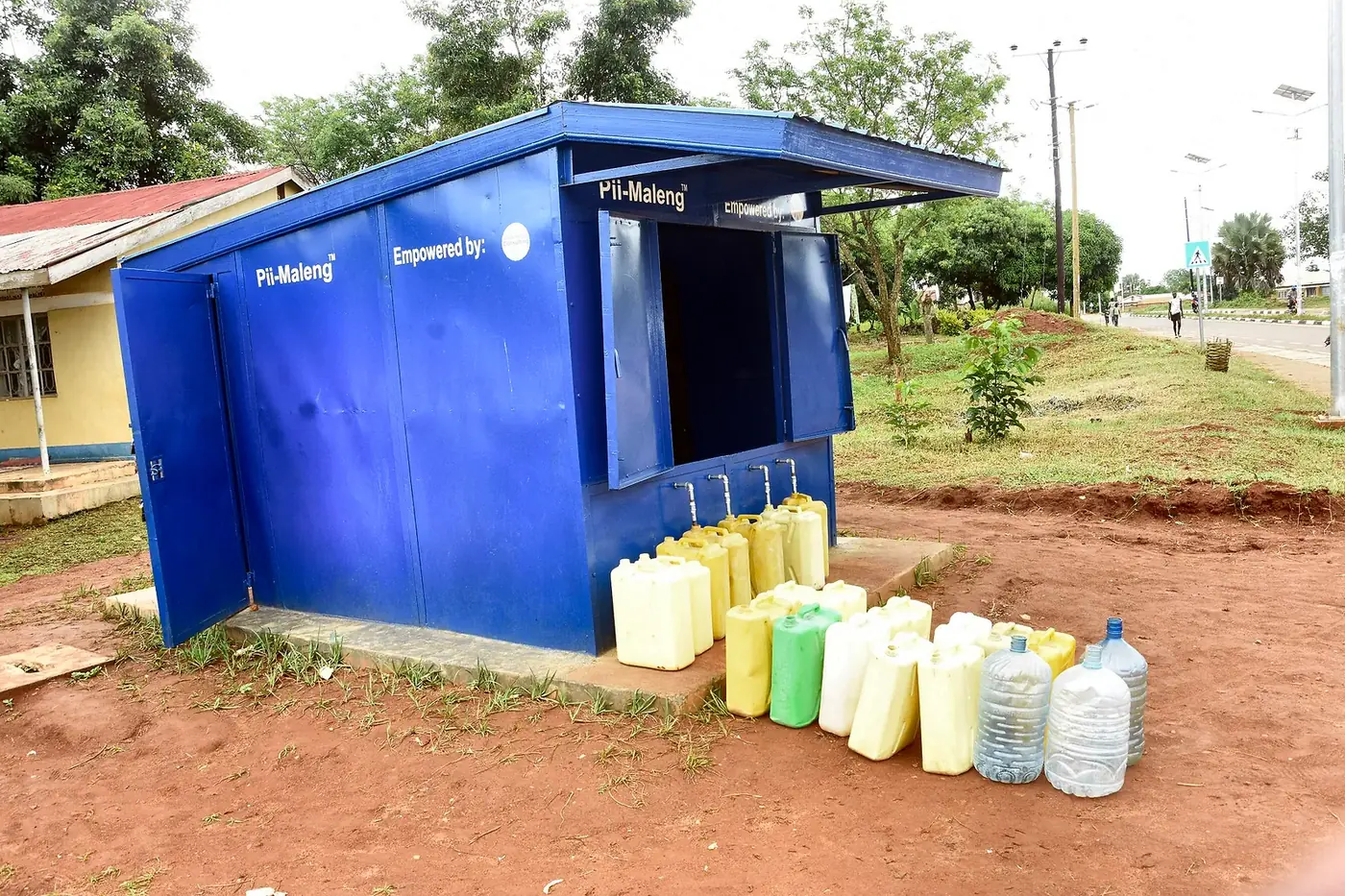
Every Pii-Maleng system follows the same design. Once the expensive parts are in place, adding kiosks and household taps is straightforward. This is the journey of the water, from the ground to a jerrycan.
1. A borehole that has been checked
We drill only where a hydrogeologist has confirmed a reliable groundwater source. Getting this right is the best protection against dry-season problems.
2. Solar pumping
Off-grid solar panels above the main kiosk power the pumps, so there is no diesel to buy and no dependence on the grid.
3. Treatment and storage at the main kiosk
The main kiosk, called K1, treats the water and sells it. Concrete pillars rise from its roof to carry the solar panels and a 10,000-litre tank, so there is no separate tower to build.
4. One main line, up to six kiosks
From K1, a single one-way main line of more than 3 km runs past up to five more kiosks. A booster pump keeps the pressure up so water reaches the far end. The line stops at the last kiosk and does not loop back.
5. Homes, schools and health centres along the way
Households, schools and health centres along the route can connect straight to the main line through their own meter. Each connection adds a customer to a source that already exists.
Why we build it this way
A borehole and pump that serve one tap are costly to keep running. Sharing the borehole, pumps, treatment and tank across many outlets spreads that cost, so water sales can realistically cover running costs and repairs. The standard design allows up to six kiosks and at least 200 household yard taps per system.
You can explore the layout on the interactive drawing on our home page.