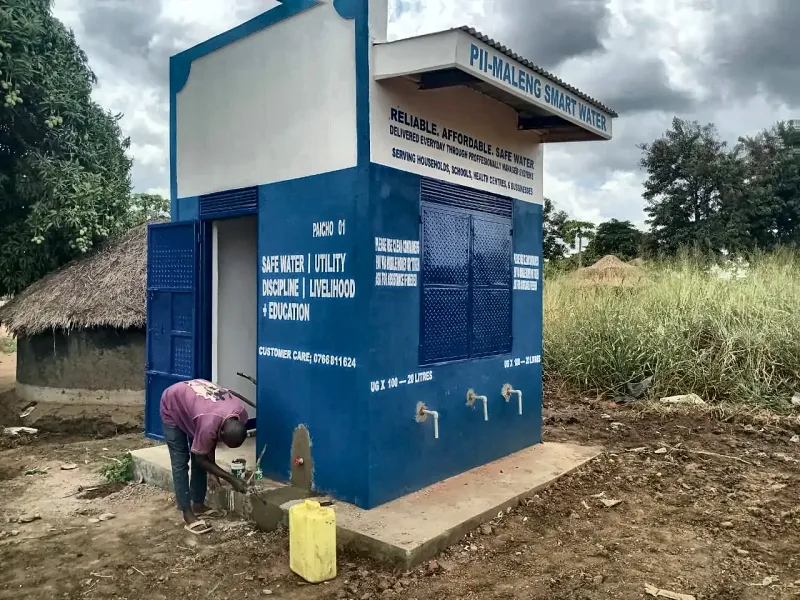
active kiosks in 2 districts 2 in Kitgum, 3 in Paicho (Gulu)
Why we started
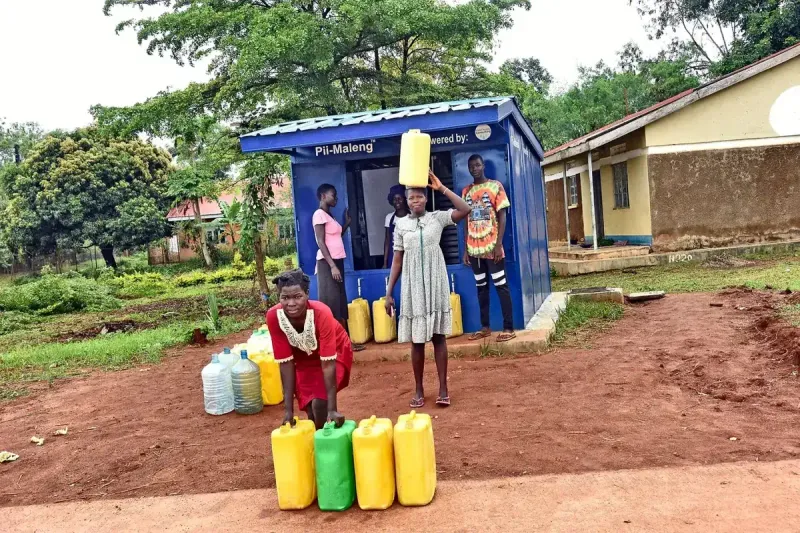
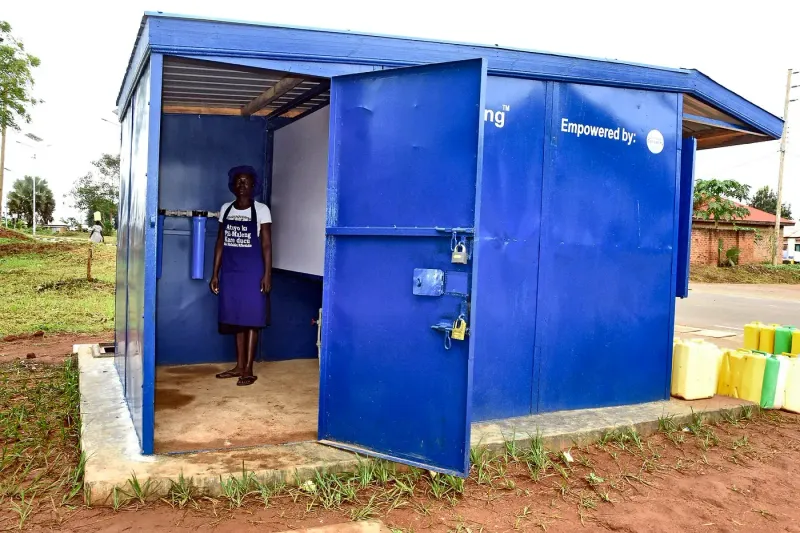
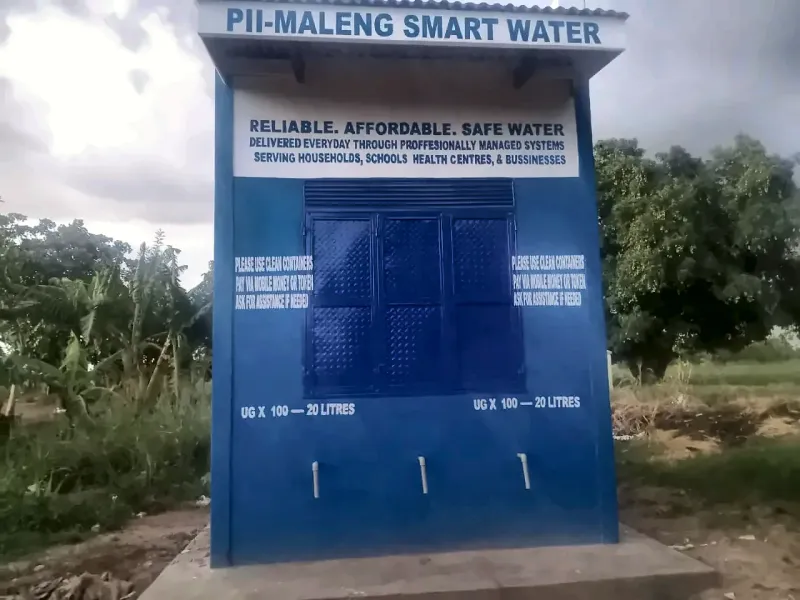
Reliable · Affordable · Safe Water
Safe, metered water for homes, schools and health centres in Northern Uganda.
A 20-litre jerrycan costs UGX .
Kitgum: selling since Apr 2024 Paicho: selling since May 2026 Awach: needs funding to start
Who we are
Pii-Maleng Smart Water Company (PSWC) is a Ugandan company based in Gulu City. We build, own and run small piped water systems in Northern Uganda, and we sell safe, metered water to homes, schools, health centres and small businesses.
Our name.
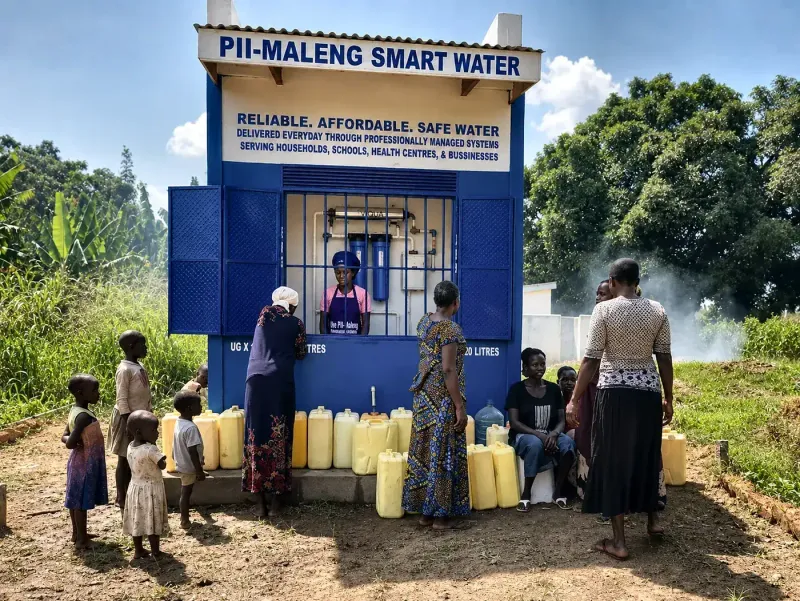
We started in Kitgum in April 2024 with 2 kiosks. In May 2026 we opened 3 more in Paicho, Gulu District, and connected the first 25 homes with yard taps. Today about 1,500 people a day collect water from our kiosks.
We run water as a business, so the service does not end when a project does. Customers pay by the metered litre. That income pays the operators, the repairs and the water testing, and any surplus connects more homes.
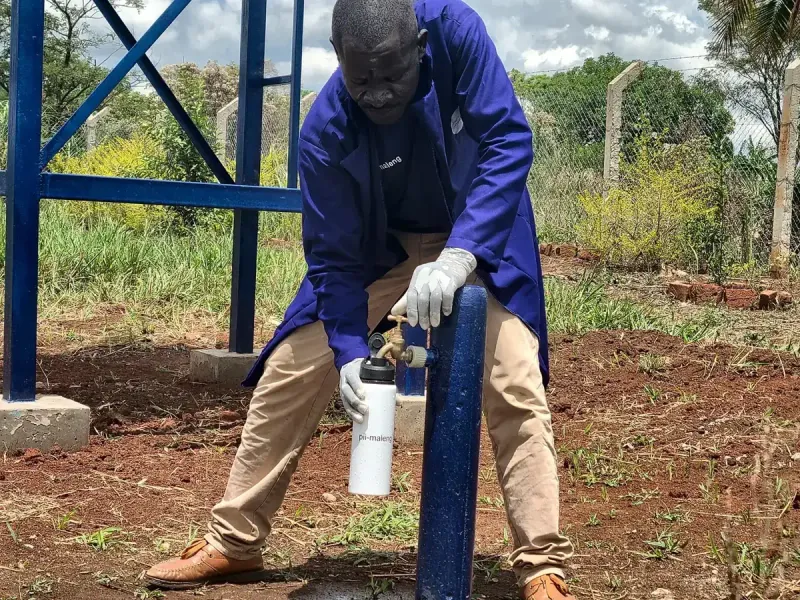
Every system works the same way: one tested borehole, solar pumps, treatment at source, and a purifier at every kiosk. Every meter is read each day, and a supervisor approves every reading.
The problem
Nobody is paid to run or repair the system. A borehole and pump that serve a single tap are expensive to keep going.
Nobody is paid to run or repair the system, and a borehole and pump that serve a single tap are expensive to keep going. When a tap breaks, families go back to unsafe sources or walk further.
Pii-Maleng began as the answer to that: a water service that someone is paid to keep running.
See our answer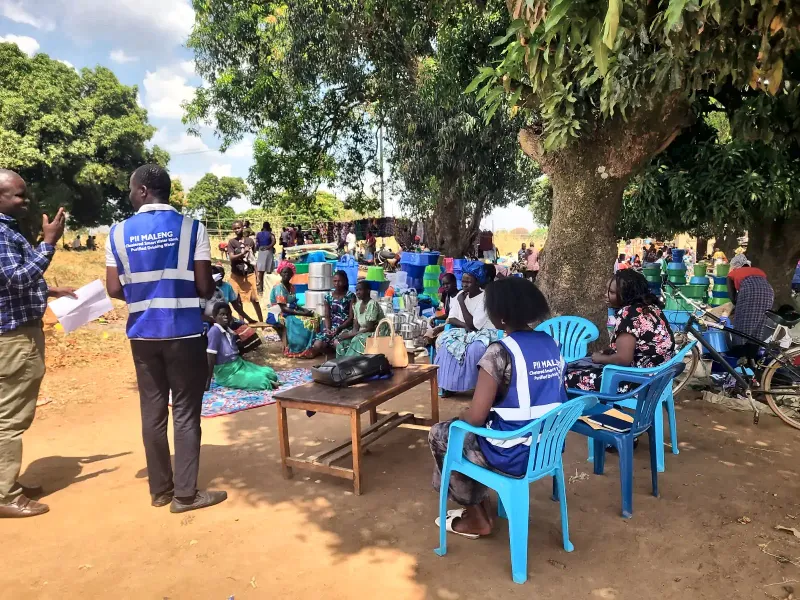
Our answer
How it works
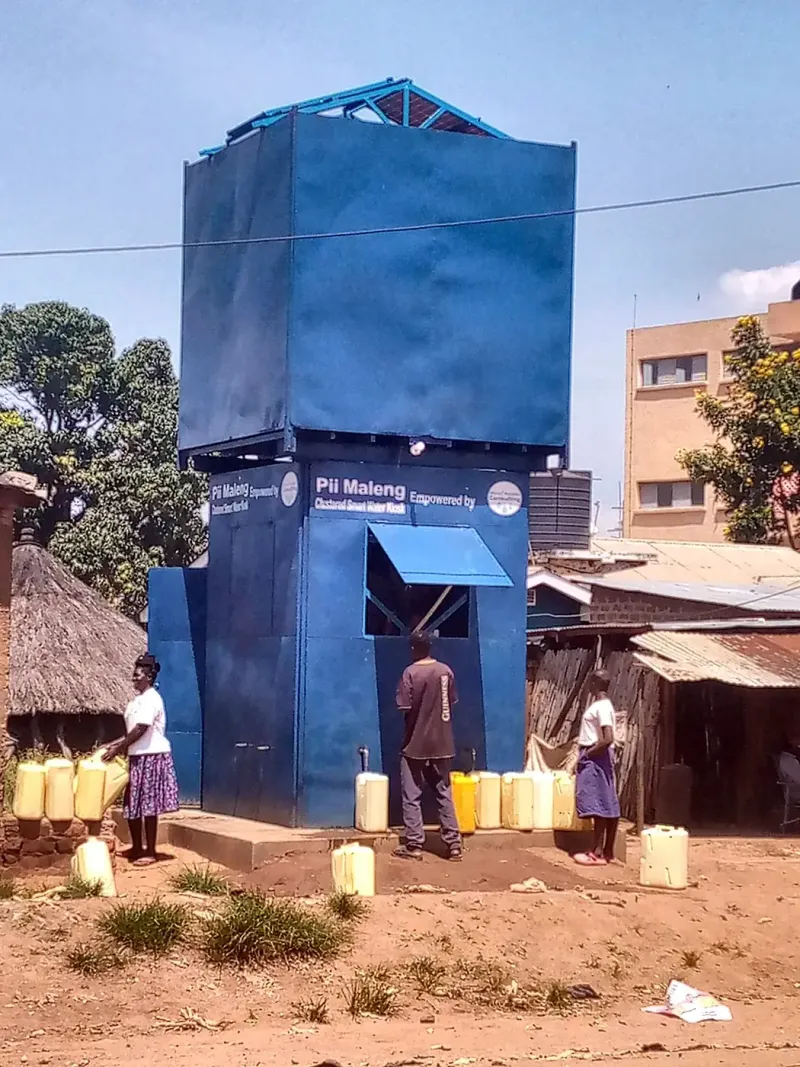
Solar pumps lift water from a tested borehole to the main kiosk, where it is treated and stored in a 10,000-litre tank. A main line then carries it to up to five more kiosks, and to homes, schools and health centres along the way.
This is our standard design. Paicho has built half of its kiosks and Awach has none yet: see what is left to build.
See the proofStandard design The full design, not the network installed today.
Proof
active kiosks in 2 districts 2 in Kitgum, 3 in Paicho (Gulu)
household yard taps connected Paicho, Gulu District
litres sold January to August 2026
daily kiosk meter records each reviewed and approved by a supervisor
of kiosk-days open and recorded January to August 2026
people a day collect water at our kiosks (estimate) August 2026, at 20 litres per person per day
April to August 2026. Paicho’s kiosks started selling in May.
| Month 2026 | Kitgum | Paicho | Total |
|---|---|---|---|
| April | 385 | 0 | 385 |
| May | 384 | 467 | 851 |
| June | 339 | 445 | 784 |
| July | 426 | 468 | 894 |
| August | 438 | 479 | 917 |
August 2026: 917 m³ sold, about 29,600 litres a day, about 1,480 jerrycans (20 L) a day.
People
Community voice
A Local Council I leader at one of our kiosks.
Why we started
A customer
Before the kiosk:
Now:
When a tap broke
What broke:
Closed for:
How it was fixed:
Our Team
What is left to build
Awach has a design and a site. It needs funding to drill. Fund Awach.
Kitgum District · selling since April 2024
Gangdyang · Kony Paco
Gulu District · selling since May 2026
Ogwal-Dire · Corner Laban · Lamin Oyoo
Gulu District
Borehole, solar pumping and treatment at the main kiosk
UGX 0 raised of UGX . Gap: UGX .
Our five-year aim.
Kitgum and Gulu Districts, Northern Uganda.
Records and water quality
Fund it
Connecting a home, school or health centre? Request a connection. Financing a whole system? See financing options. Partnering as an organisation? Talk to our team.
No money is taken now. We email you payment details within 2 working days. Each pledge gets its own reference number.
Finance
Each system is a defined asset. Funding can come from a mix of:
Terms, including how and when a partner may step out, are agreed directly with each partner. Nothing on this website is an offer of securities or a promise of financial returns.
Request the information packContact Us
Ask us about water service, a connection for your home, school or health centre, or a partnership. We reply within two working days.
Location
Gulu City, Northern Uganda
Serving Kitgum and Gulu Districts
Telephone
+256 766 811 624